整理/秦珍子 制图/李晗 张鲁沙(实习生)
君子求道不求食
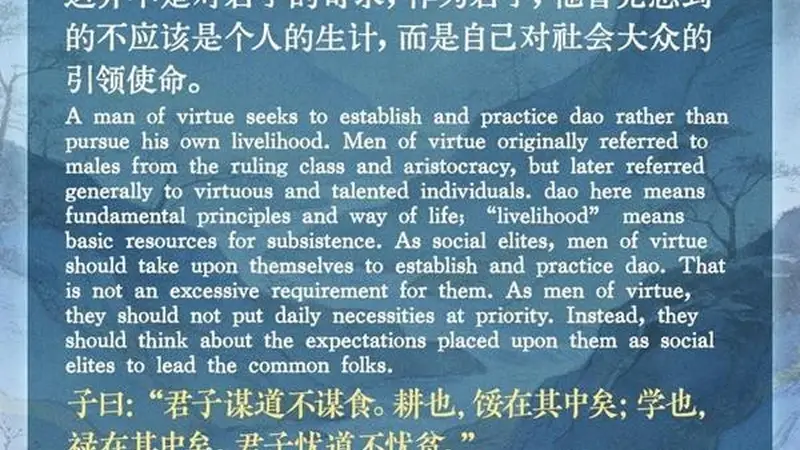
君子所追求的是大道的建立与实行,而非个人的温饱。君子最初指统治阶级和贵族男性,后来广泛指有才德的人;道指的是根本的法则、道理等;食就是食物,泛指基本的生存条件。作为社会上的精英,君子应当把道的确立与实行当作自己的责任。这并非对君子有过高的期待,身为君子,他首先应该考虑的不是个人的温饱,而是自己对社会大众的引领任务。
A Man of Virtue Seeks Dao, Not Livelihood
A man of virtue pursues the establishment and practice of dao instead of his personal livelihood. Originally, men of virtue referred to males in the ruling class and aristocracy. Later, it came to mean virtuous and talented individuals generally. Dao implies fundamental principles and way of life; livelihood refers to basic resources for survival. Eminent individuals in society should regard the establishment and practice of dao as their duty. This is not being overly demanding of them. As men of virtue, they should not prioritize daily needs. Rather, they should contemplate the expectations upon them as societal leaders for the common people.
引用孔子的言论说:“君子谋道不谋食。耕也,馁在其中矣;学也,禄在其中矣。君子忧道不忧贫。”(《论语·卫灵公》)(孔子说:“君子追求的是大道的建立与实行,而不是个人的温饱。耕种田地,可能仍会挨饿;求学问道,可能得到俸禄。君子担忧的是大道能否建立或实行,而不是自己是否贫穷。”)
Confucius remarked, "Men of virtue seek to establish and practice dao rather than pursue their own livelihood. Farmers may still face hunger, while scholars might secure official positions. Men of virtue, however, worry about the establishment and implementation of dao rather than their own poverty."(The Analects)
依据:中国青年报
2026年07月30日 01版


